When I was getting dressed this morning and my first choice of trousers didn’t fit, I accepted that this was a week when they didn’t without losing focus on the colours of the outfit I was putting together. When I looked at myself in the mirror and thought ‘that looks good’ I felt a stab of excitement.
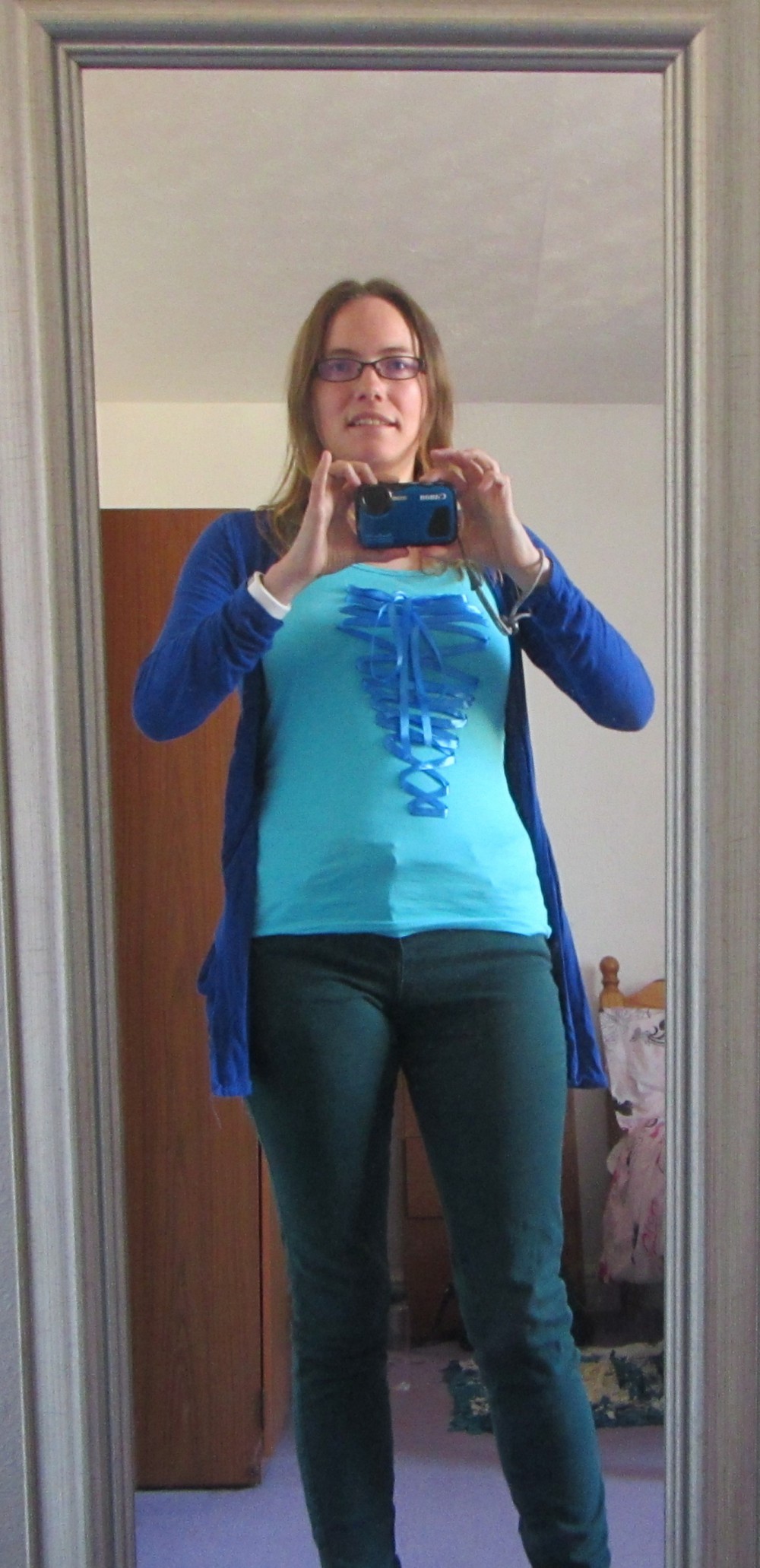
I used to dream of being able to do this. I studied books and articles about dressing in colour and with personal touches. I worked hard on my body image and accepting myself whatever my weight and looking in a mirror without counting my flaws and now most of the time I can do it. I can get ready without having to focus on the coping strategies I use to battle or diffuse each fear and insecurity as it comes up. Even as I thought that up came a fear:
Does that mean everyone will think that I’m better/recovered/cured?
I still shy away from congratulations about ‘how well I’m doing.’ I know this can be frustrating for people who feel that I am rejecting their compliments. My evasion is because these judgements don’t line up well with my day to day experiences.
My mental health labels did not come from experiences, thoughts and feelings that arrived suddenly like chicken pox spots. The painful memories, the drain of mental energy to keep them out of my conscious thoughts, the feeling of alienation from my peers and the desperate search for anything that would help me feel OK enough to function in this moment, go back as far as I can remember. They also have not disappeared leaving only the occasional scar despite me doing so much better than I was at my lowest point/
For me, managing these experiences is much more like managing my type 1 diabetes. For both if I take them into account and use the right mix of skills, planning, and medications for today then I can do most of the things I need and want to do. For both what that mix is changes from day to day and hour to hour and sometimes I cannot work out what to change quickly enough to catch up and have to take time out to focussing on coping. For both if I decide that I have recovered and stop taking these issues unto account things go wrong pretty fast.
My diabetes team does not waste time fretting about what ‘recovery’ from type 1 diabetes would mean for me or ‘paths to discharge’. With them the focuss is on avoiding complications in the future and identifying the things I want to do now for which my diabetes is an extra hurdle. There will be times in my life when I need less input and times when I need more Many of these will be caused by environmental factors that we can’t predict. So my appointments vary hugely in their spacing and I have a very clear plan for how to get advice if things go wrong between.
I wish my dealings with mental health services had been this focussed. With my current care coordinator we are much closer and I have been able to move forward as a result.
Knowing that we have a system in place if things get overwhelming lets me stretch myself both in therapy and in life. Moving in with my partner is as scary for me now as leaving hospital was last year. The skills and confidence I gain each time I move are partly cancelled out by the bad experience that moving often is the rest is what allows me to raise the stakes while working therapeutically with parts of me that are still frozen in the trauma of childhood moves.
In front of my mirror I used skills I’ve learned and practised which take things I do well and use them to fill gaps in my skills left by myformative experiences. If I don’t bother to fill them then painful stuff from the past will leak into my getting dressed, drowning me so that I will even grab the tail of a venomous snake if it will pull me out to survive for one more breath.
Today I’m doing well and I look good but it doesn’t mean those holes are gone. Some day the therapy I’m doing may fill in some of them but right now I’m practised at filling them. But it still takes time and effort.


 Learning to Thrive